
From Our Farm to Your Table
Our Role
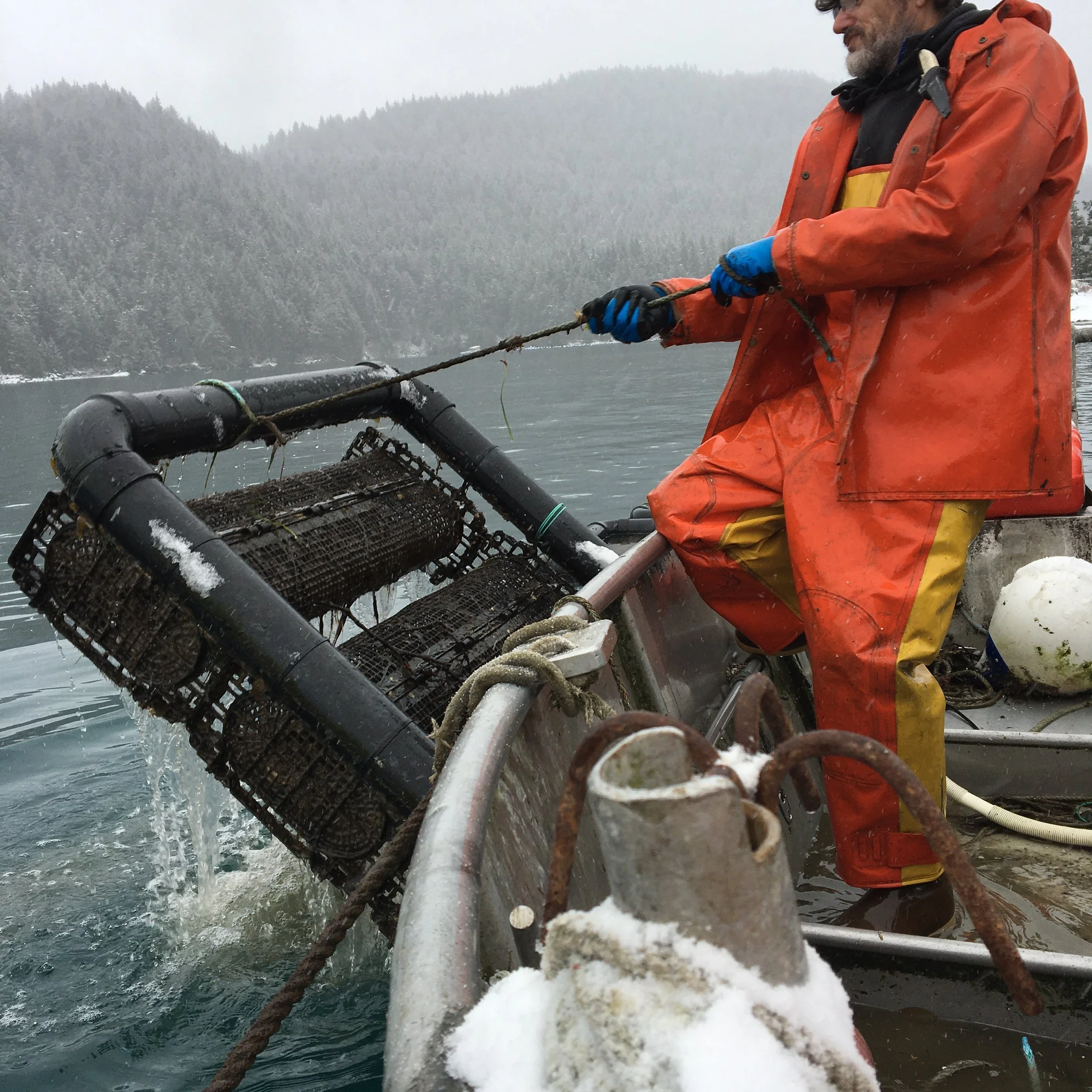
It takes 3-5 years to grow a market-ready oyster on our farm. Creating and maintaining optimum habitat is a year-round endeavor. Oysters must be sorted and moved often to sculpt their shape and defoul their environment. They thrive in the long summer daylight and cool pristine waters here. Twenty-foot tides churn warm Pacific currents with icy mineral-rich runoff from the glacier fields of the Kenai Range—perfect conditions for growing phytoplankton. Jakolof Bay's strong currents bring massive quantities of this favorite food right past their little filter-feeding mouths.
By the time they're ready for harvest, they're delicious, plump, firm, and sweet with pristine liquor. Our oysters are harvested from Alaska Department of Environmental Conservation (ADEC) certified clean waters and laboratory tested by ADEC. We follow strict temperature control protocols mandated by ADEC.
About a month before harvest, we tumble the oysters to clean them off. This process can chip the shell edges, which they self-repair in 3-4 weeks—then they're in good shape to keep their water and stay fresh. We store these tumbled oysters in an area of the farm where we have the strongest current and cleanest water. When they're fully healed from the rough handling, we take them out one last time to rinse, sort, and pack.
We're confident that this process gives them the best chance of staying fresh until they meet your shucker.
Your Role
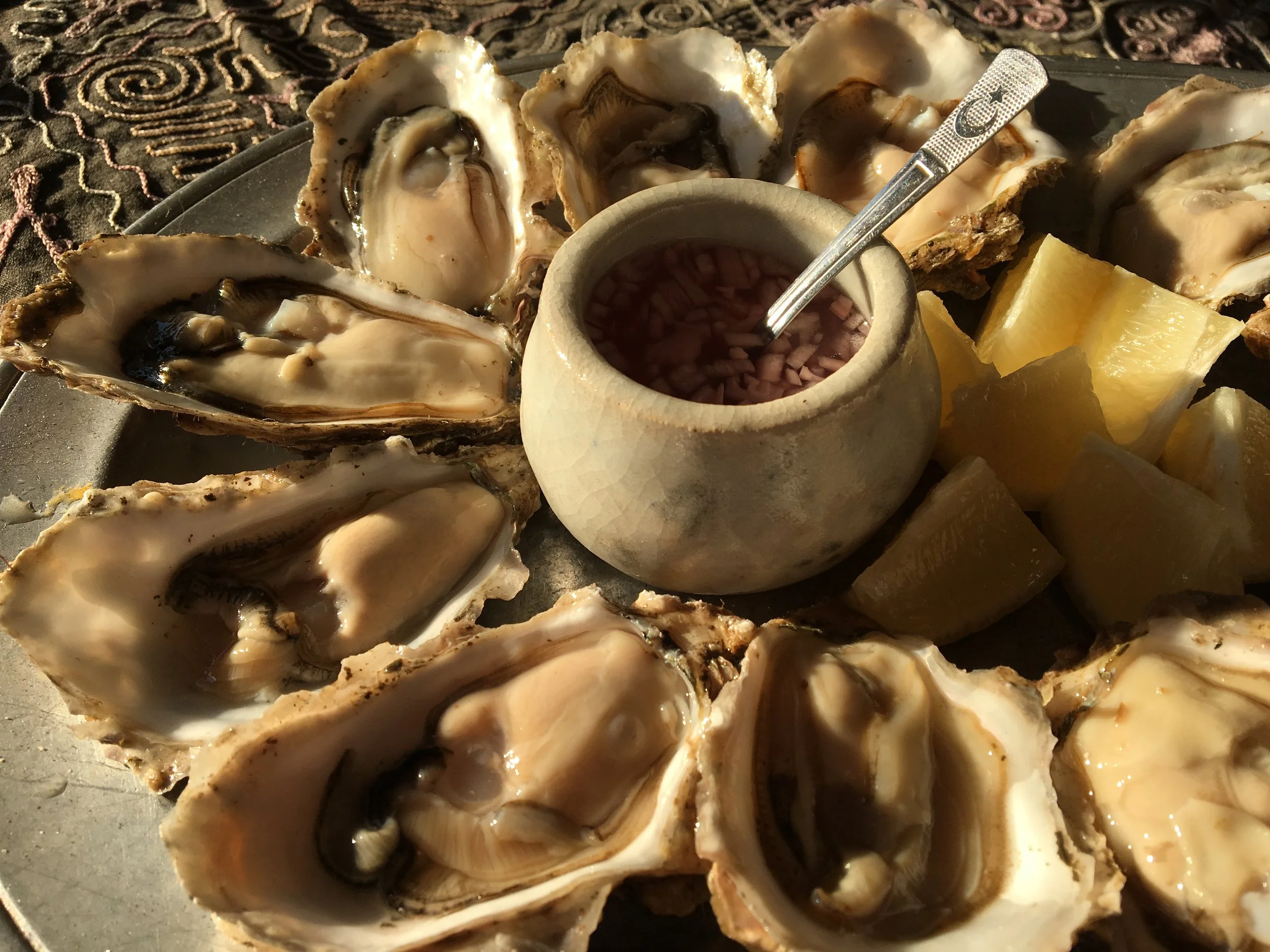
Now it’s your turn. Once we've done our part—growing, tumbling, healing, and packing your oysters with care—they're ready for you. Oysters are one of the few foods you can eat alive, and they can survive out of the water for up to 2 weeks. But fresher is always better. On our farm, oysters may not make it across the bay before they're consumed (crew benefits!).
If you don't plan to eat them straight out of the box, here's how to keep them alive and thriving until you're ready.
Clean the outside of the shell with a brush to remove any debris or sea hitchhikers.
Store oysters cupped side down (flat side on top) and cover with a damp cloth to retain their “liquor” (moisture).
KEEP THEM COLD! Live oysters should be stored between 40-45 degrees F (5-9 degrees C).
Never store shellfish in standing water!
Never store shellfish in airtight containers (no tupperware, ziplock, or vacuum sealing).
A gaping oyster is a stressed oyster; discard if it doesn’t close on its own when tapped.
If you’re eating them on the half shell, you can give them a quick sniff test. When shucked, they should have a fresh, appetizing, seaside scent.
You can do a live oyster check by squeezing a little lemon or vinegar on their mantle and they should retract slightly - they, too, can pucker their lips.
Avoid freezing oysters. If using dry ice or gel packs, keep them insulated from direct shell contact by using a cloth or other insulating material.
Trust Your Senses
An oyster should carry the delicate essence of its environment, not the reminder of a high tide on a sunny day. Yet oysters can be like pistachios; occasionally, there's one that simply doesn't meet the standard. For this reason, we pack 13 in a dozen.
Introducing ingredients that overpower the oyster can mask essential indicators of its quality. Trust your sense of smell and your palate to alert you if an oyster isn't flawless. Never hesitate to discard anything less than perfection.
Consumer Advisory: As in the case with consuming other raw animal protein products, there is a risk associated with consuming raw oysters, clams, and mussels. If you suffer from chronic illness of the liver, stomach, or blood, or have immune disorders, do not eat these products raw. This includes individuals taking antacids which can change stomach pH, reducing your body's ability to combat naturally occurring bacteria in raw foods.
We are required to put this advisory on our packaging for a reason. Additionally, many doctors advise pregnant women to avoid raw animal proteins. We encourage you to share this information with your guests. If any of them won't drink your wine or eat your oysters, maybe congratulations are in order.
Seasonal Variation
The flavor of oysters changes with the seasons, weather, age, reproductive cycles, and their placement in the bay. You can keep a log of your oyster tastings and see if you notice a difference from month to month.