
Are Oysters Sustainable?
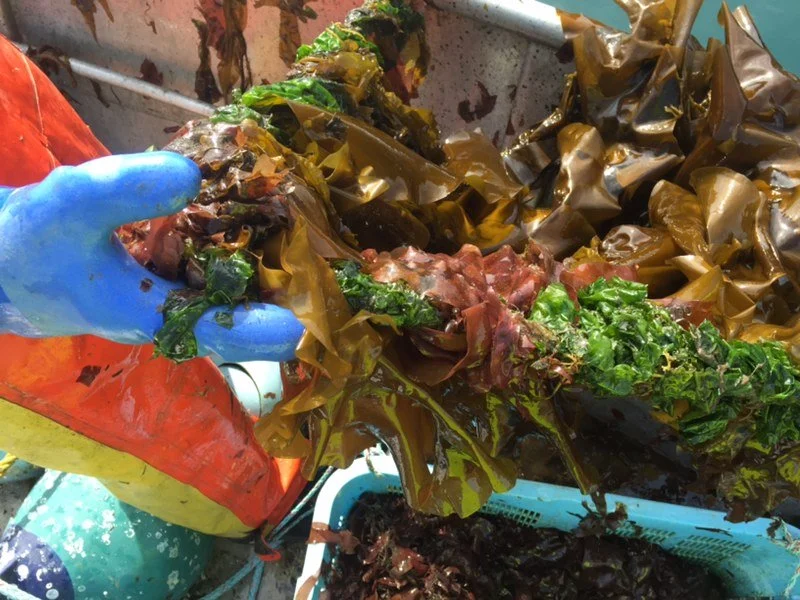
Kelp loves growing very near our oysters—all this life means rich, productive water (and job security for us)
The answer is more interesting than just "yes" or "no." Oyster farming is what's called a zero-input activity—we add no water, no food, and no fertilizer. Our oysters feed themselves by filtering the bay's natural plankton.
But it goes beyond that. While oysters are growing, they're actually providing benefits back to the ecosystem around them.
What oysters do while they grow
A single mature oyster can filter up to 50 gallons of water per day, pulling out phytoplankton and organic particles. That filtering helps keep the water clean and nutrient-balanced.
Here's the interesting part: as oysters clear the water, more sunlight penetrates deeper, which helps grow more phytoplankton. The gear becomes habitat for small creatures—invertebrates, juvenile fish, kelp—that feed on that plankton, and those creatures become food for juvenile salmon using our farm as nursery space. It's not just oysters out there; it's a mini-ecosystem cycling nutrients and supporting life throughout the bay.
The bigger picture
The benefits don't stop in the water. When we harvest, the shells don't go to waste. Farmers and gardeners use crushed oyster shells as soil amendments and chicken feed, returning those minerals to the land instead of shipping in products from outside Alaska.
Oyster farming supports local jobs and keeps our coastal economy diversified. When you buy from us, your money stays in Alaska—supporting our family, our community, and our corner of Kachemak Bay.
So are oysters sustainable? We think so. But maybe the better way to say it is this: oysters give back more than they take.
And they feed us!