
Our Weight-Based Sizing Explained
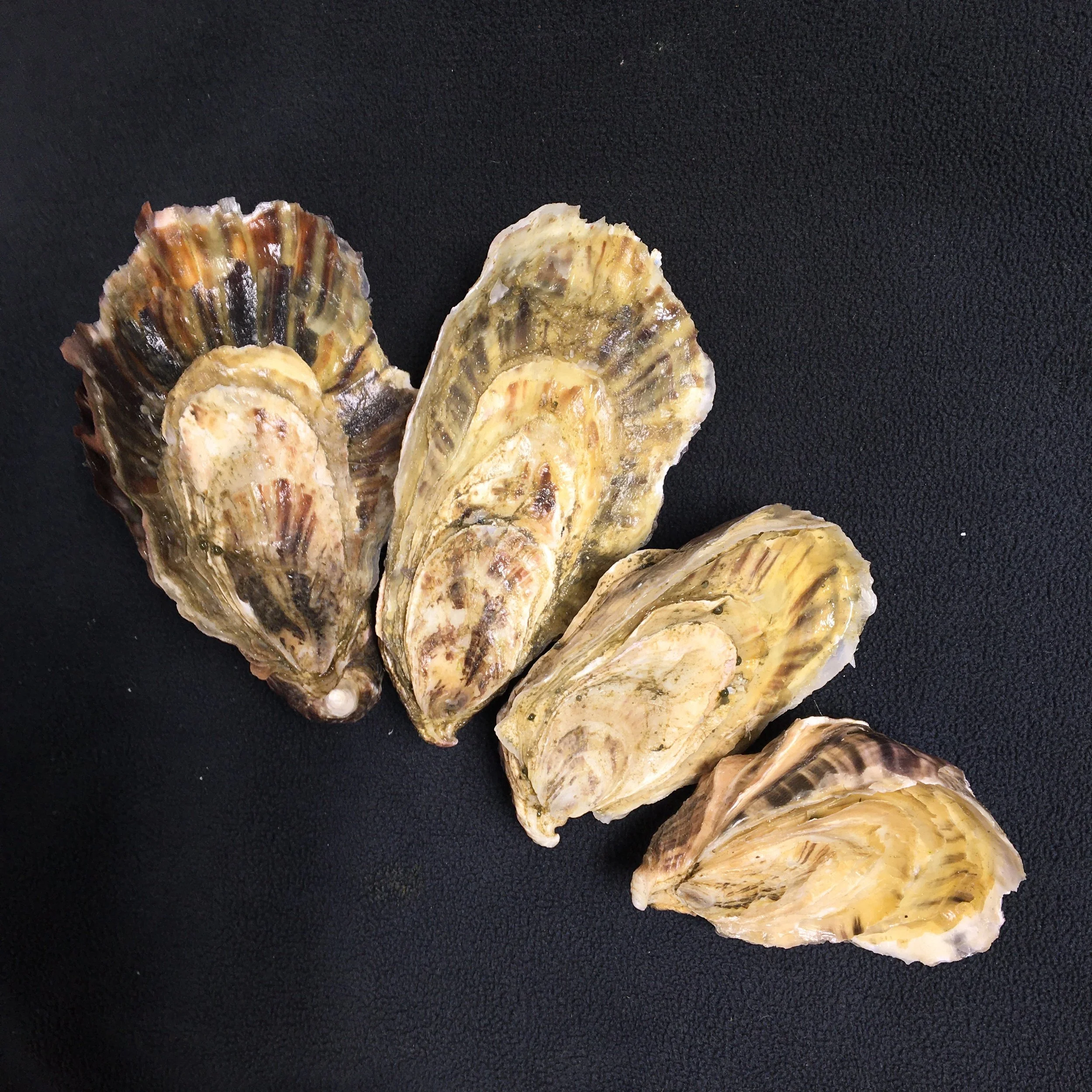
From left to right: No. 2, No. 3, No. 4, and No. 5. Like metal wire gauges, oyster sizing runs backwards—smaller numbers mean bigger oysters.
Why Our Oyster Sizing Actually Makes Sense
Ever been confused by oyster sizes? You're not alone. Most US farms use terms like "cocktail," "select," or "large" - but a "small" oyster from one farm might have more meat than a "large" from another. It's frustrating when you don't know what you're actually getting.
We solved this problem by adopting the European weight-based system and using a sorting machine that weighs each oyster individually. This means when you order a dozen No. 4 oysters, you're getting consistent meat content - even if the shells look different. You might get a 3-inch oyster with a moderate cup next to a 2-inch round one that looks like a golf ball, but when you shuck them, they'll have very similar amounts of meat.
Our Size Guide:
No. 5 (35-45g each, ~1lb/dozen): Our smallest but meatiest - these are mature, slow-growing oysters with great flavor
No. 4 (45-65g each, ~1.5lb/dozen): Our most popular size - the perfect balance for both raw and grilled
No. 3 (65-85g each, ~2lb/dozen): Our largest market size - usually younger oysters that sell out quickly
You might notice a No. 2 in our photo—we occasionally have these larger sizes (85-115g each) available depending on harvest conditions, but rarely enough to offer them as their own size. So anything over 85g gets grouped with the No. 3s. When oysters are running particularly big, you might even find a "zero the hero" (150g+) mixed in with your order. The beauty of the weight-based system is you know the minimum of what you're getting—anything larger is a bonus.
This is just the beginning of oyster quality. There's so much more that goes into growing exceptional oysters - from managing meat-to-shell ratios to developing those perfect deep cups. If you're curious about the finer points of oyster farming and want to know when fresh harvests are available, our harvest updates share the behind-the-scenes details that make the difference.
Note: Oysters may weigh slightly less on arrival due to travel, but we pack them flat-side up to minimize water loss.