
Oysters Rockefeller Aux Orties
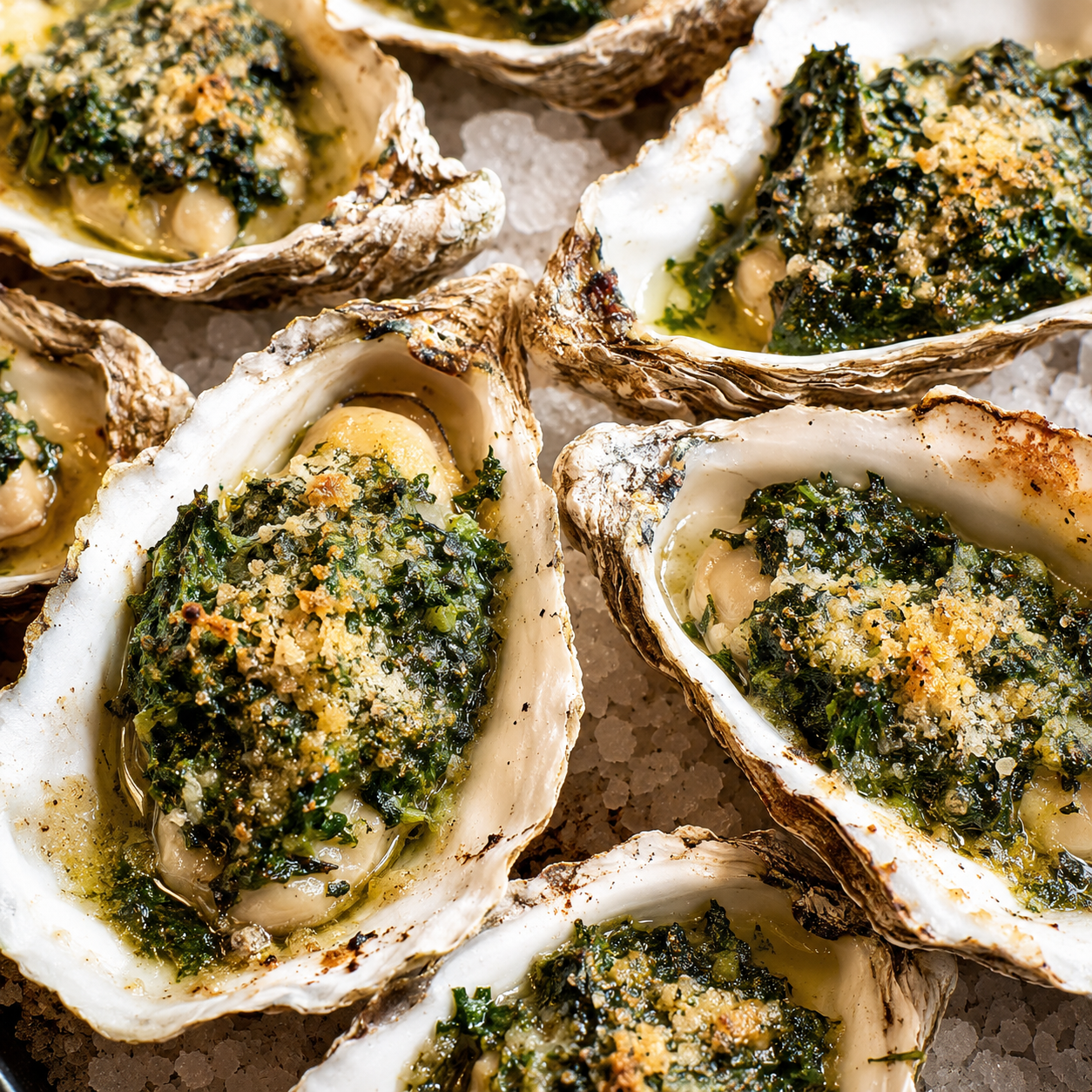
Nettles not just a substitution — an upgrade!
Oysters Rockefeller has been seducing oyster skeptics since Antoine's Restaurant in New Orleans invented it in 1899 — supposedly so rich they named it after the wealthiest man in America. The magic is in the combination: warm, butter-poached oyster, a whisper of anise from the Pernod, just enough Parmesan to brown and add a savory edge. It works because each element mirrors something already in the oyster. Anise echoes the briny sweetness, butter amplifies the natural richness of the meat, and the heat transforms something delicate and raw into something deeply comforting, without losing the oyster entirely. It's one of the great gateway preparations for anyone still on the fence about raw.
Our version swaps spinach for wild Alaska nettles, and it's not just a substitution — it's an upgrade. Where spinach is mild and neutral, nettles bring a mineral depth that resonates with the salinity of a Jakolof Bay oyster. Foraged in spring from the hillsides around the bay, blanched just long enough to neutralize the sting, then folded into salted butter with shallots and a generous splash of Pernod — they belong together. Frank would say aux orties — with nettles. I just say make it.
INGREDIENTS
12 fresh oysters, shucked on the half shell
2 cups fresh nettles, packed (wear gloves)
3 tablespoons salted butter
2 shallots, peeled and finely minced
2-3 tablespoons Pernod
2 tablespoons heavy cream
3 tablespoons Parmesan, finely grated
½ lemon, juiced
¼ teaspoons black pepper, freshly cracked
STEPS
Blanch the nettles: Wearing gloves, drop 2 cups fresh nettles packed, into a pot of boiling salted water for 60 seconds. Transfer immediately to an ice bath. Once cool, squeeze out as much water as possible — be thorough, excess moisture will make the topping watery. Chop finely. The sting is completely neutralized by the heat.
Arrange shucked oysters on a bed of rock salt or crumpled foil on a baking sheet — this keeps them level and holds the oyster liquor inside. Set aside.
Cook the shallots: Melt 3 tablespoons salted butter in a small skillet over medium heat. Add 2 shallots, peeled and finely minced and cook gently until soft and translucent, about 3 minutes. Don't let them brown.
Add Pernod: Add 2-3 tablespoons Pernod to the pan. Optional: tip the pan slightly to flambé — the flame burns off the alcohol in about 20 seconds while concentrating the anise flavor. If not flambéing, let it simmer for 1 minute until slightly reduced.
Finish the topping: Add the chopped nettles and 2 tablespoons heavy cream to the pan. Stir to combine and cook for 1–2 minutes until the mixture just comes together into a loose, cohesive topping. Season with ¼ teaspoons black pepper, freshly cracked and a squeeze of ½ lemon, juiced. Taste — the butter and Pernod should both be present.
Top and broil: Preheat your broiler to high. Spoon a small amount of the nettle mixture onto each oyster, enough to cover the meat without overflowing the shell. Finish with a pinch of 3 tablespoons Parmesan, finely grated on each. Slide under the broiler for 2–3 minutes until the Parmesan is golden and the edges of the oyster just begin to curl.
Serve straight from the pan on the rock salt with a small wedge of lemon. The oyster keeps cooking off the heat, so you don't want to wait — and honestly, neither will your guests.
NOTES
Nettle substitute: if nettles aren't available, young spinach works but lacks the mineral depth. Use the same quantity and skip the ice bath — just squeeze well.
Pernod substitute: if Pernod isn't available, use 1 tbsp finely chopped fresh fennel fronds plus 2 tbsp dry white wine. Add the fennel fronds with the nettles in step 5 rather than with the shallots. More subtle than Pernod but very good.
Freezing nettles: blanched, squeezed nettles freeze beautifully. Portion into small balls and freeze on a sheet pan, then bag. Thaw in the fridge overnight and squeeze once more before using.