
How Long do Oysters Last?
It depends on whether they're alive.
That might sound like a trick answer, but it's the key to understanding everything about oyster storage. When people ask how long oysters last, they're usually thinking about seafood, and seafood has a short, unforgiving timeline. Two or three days for fresh fish before it's a lost cause. But that's because a fish is dead shortly after it comes out of the water. You're racing the clock from that instant.
An oyster is different. It's still alive when it leaves our farm. Still alive when you pick it up. Still alive when you unpack it. Treat it right and it can stay that way for up to two weeks. So the question isn't really "how long does it last," it's "how long can you keep it alive?"
Keep them cold, keep them alive
The single most important thing you can do is keep them cold. Not frozen, just consistently refrigerated, ideally between 32–45°F. We put a 7–10 day best-by date on our oysters (varying by season and condition), but that assumes the cold chain has been maintained from the moment they left the water.
Think of cold as their holding pattern. Oysters in cold storage are quiet, metabolism slows, they close up, they wait. The moment temperatures rise, their condition starts to change.
No standing water and why
Here's one that sometimes surprises people: don't store oysters in water. Not even a bowl of water in the fridge.
Oysters are filter feeders. Put them in water and they'll do exactly what they're built to do — filter it. The problem is that tap water isn't seawater, and fresh water is actually harmful to them. A closed container of water also quickly becomes the wrong environment. Store them cup-side down, covered loosely with a damp towel, that keeps them moist and lets them breathe.
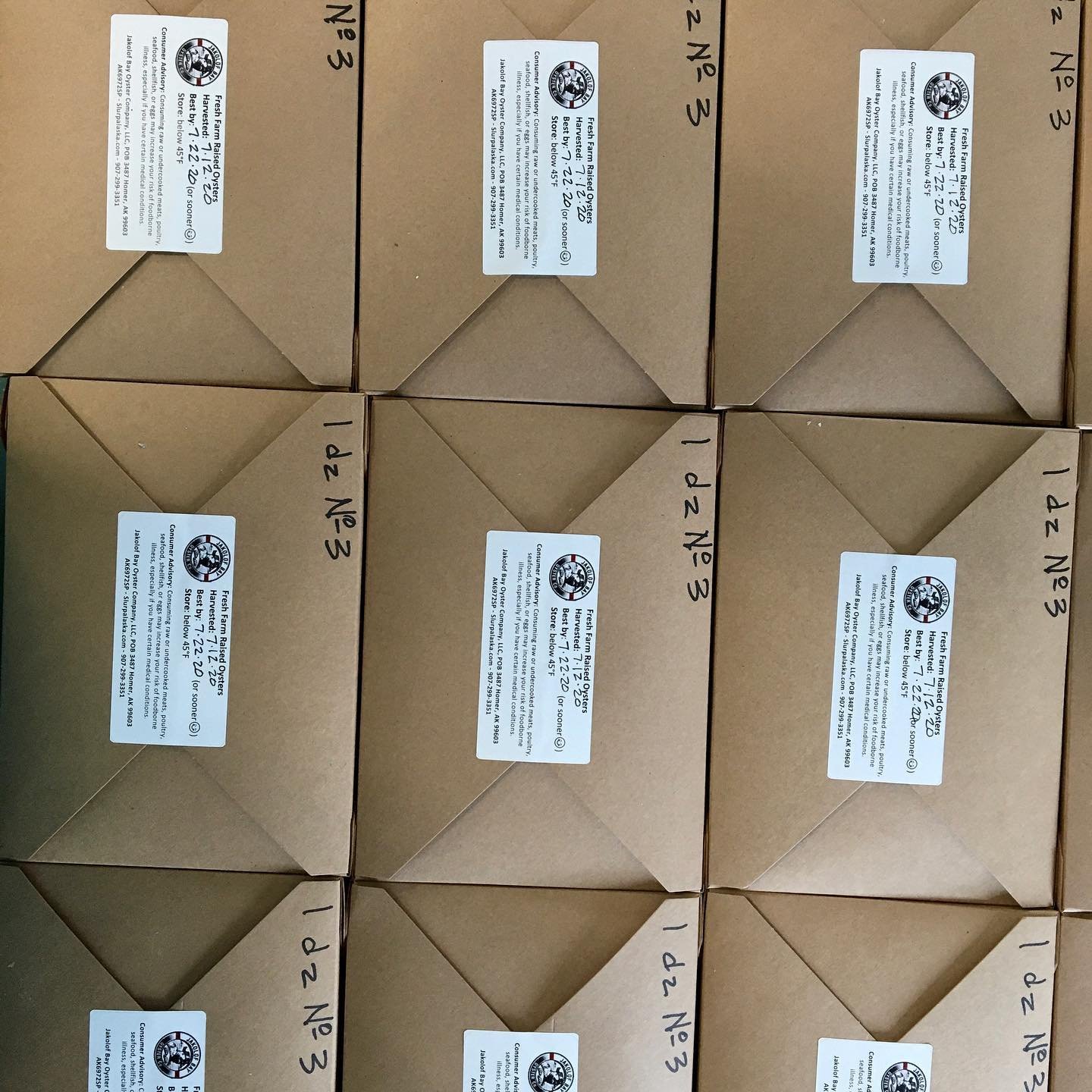
Open the box and check that they are still flat side on top (they can settle wrong during transport).
The cumulative threat
Every hour outside of ideal conditions is a withdrawal from the bank. It's not like their account goes to zero on day seven, it's a gradual process, and it compounds. A few hours in a warm car, a day in a fridge running slightly warm, a night uncovered, each one nudges the balance down.
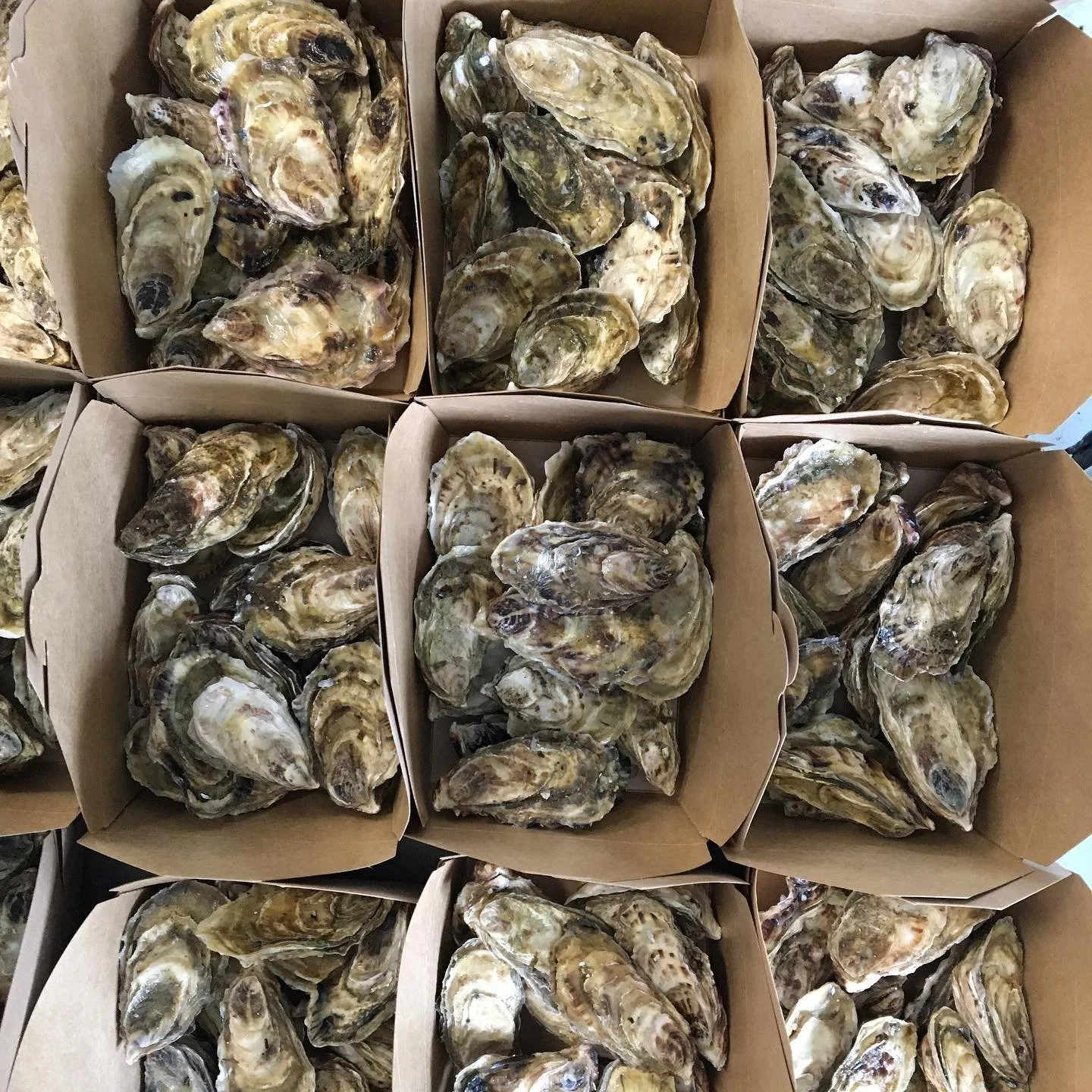
They hold their liquor better nestled that way, then place a moist towel on top and the crisper drawer is ideal.
The first signs show up as subtle quality changes. A healthy oyster is tight and solid and heavy, holding its liquor. An oyster resting slightly open, sometimes called a “gaper,” that closes when tapped is still alive, but it's telling you something: it's stressed and has likely lost some of its liquor. Think of it as an eat-me-now or cook-me-later signal. One that won't respond at all, and makes a bright hollow sound when tapped, should be discarded. Learn to read these cues the way you'd notice your lettuce starting to wilt. Early information that helps you make better care and serving decisions. We hand pack them cup-side down, 13 to the dozen, acknowledging the journey they've already made and aiming to get you a clean dozen worth slurping raw (better one too many than one too few!).
When they arrive, you can put the box straight in the fridge. Just lay a moist towel on top and slide them into the crisper drawer, which is designed to keep things from drying out. They'll be right at home.
"But aren't they tested?"
Yes! And it's worth understanding what that means. We test our growing water five times a year as required by our state permit. That testing is about the bay itself: the water quality our oysters are growing in, which matters a great deal for things like norovirus that can be present in polluted growing environments. We also test separately for marine biotoxins like PSP — a completely different category of risk that has nothing to do with temperature or how oysters are handled after harvest. That's a story for another post.
Testing is one part of oyster safety. Careful handling after harvest is the other half of the equation. Once oysters leave the water, a different set of conditions takes over, and that's where our role as farmers and your role as oyster lovers becomes the real quality control: keeping them cold, keeping them happy, keeping them alive.
The cold chain is the real test
Oysters naturally contain marine bacteria — part of living in the ocean, just as all fresh foods contain their own microbial ecology. Cold temperatures keep those systems stable. Warm temperatures accelerate change, which is why careful refrigeration matters so much with raw shellfish.
What this looks like in practice
Get them cold immediately after pickup or delivery
Store cup-side down, covered with a damp (not wet) towel in the crisper drawer (higher humidity)
No standing water, no airtight containers
Tap before shucking — if it doesn't close, toss it
Enjoy within 7–10 days of harvest, sooner if you can
Freshness in oysters isn't a countdown. It's a condition you maintain. Treat them like the living things they are, and they'll reward you for it. The good news is oysters are built for this. In nature they spend hours exposed between tides, sealed tight and waiting. Good refrigeration simply helps them stay in that resting state until you're ready to enjoy them.